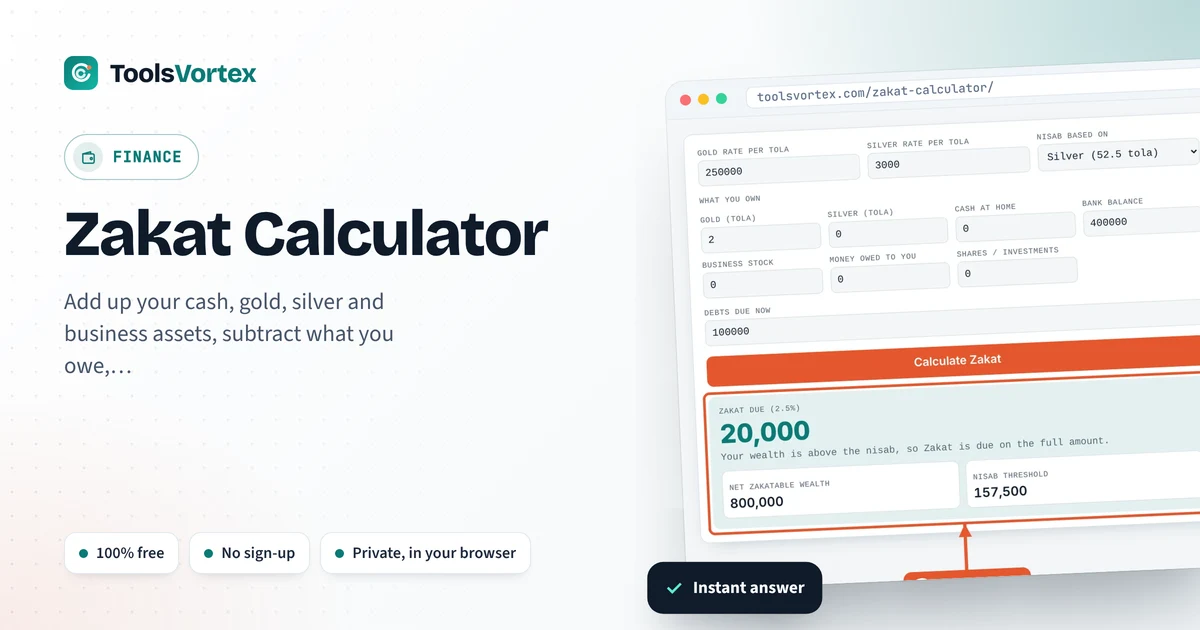
Add up your cash, gold, silver and business assets, subtract what you owe, and see whether you meet the nisab and how much Zakat is due.

Zakat is 2.5% of the wealth you have owned for one full lunar year, once that wealth is at or above the nisab. This calculator keeps the math simple: you enter what you own and what you owe, add today’s gold or silver rate, and it tells you whether Zakat is due and how much. It works in any currency, so Rupees, Riyals or Dollars are all fine.
How is Zakat calculated?
Add up your zakatable assets: cash, bank savings, gold, silver, business stock, money others owe you and investments. Subtract debts you have to pay now. If the result is at or above the nisab, your Zakat is 2.5% of that total, which is the same as dividing it by 40.
What is the nisab?
The nisab is the minimum wealth a person must have before Zakat becomes due. Scholars set it using two traditional measures:
| Measure | Tola | Grams |
|---|---|---|
| Gold | 7.5 tola | 87.48 g |
| Silver | 52.5 tola | 612.36 g |
Because silver is far cheaper than gold, the silver nisab is much lower, so more people reach it. Many scholars recommend using the silver nisab for cash and mixed assets because it benefits more people in need. If you own only gold and nothing else, the gold nisab is commonly applied. When unsure, ask a scholar you trust.
Worked example
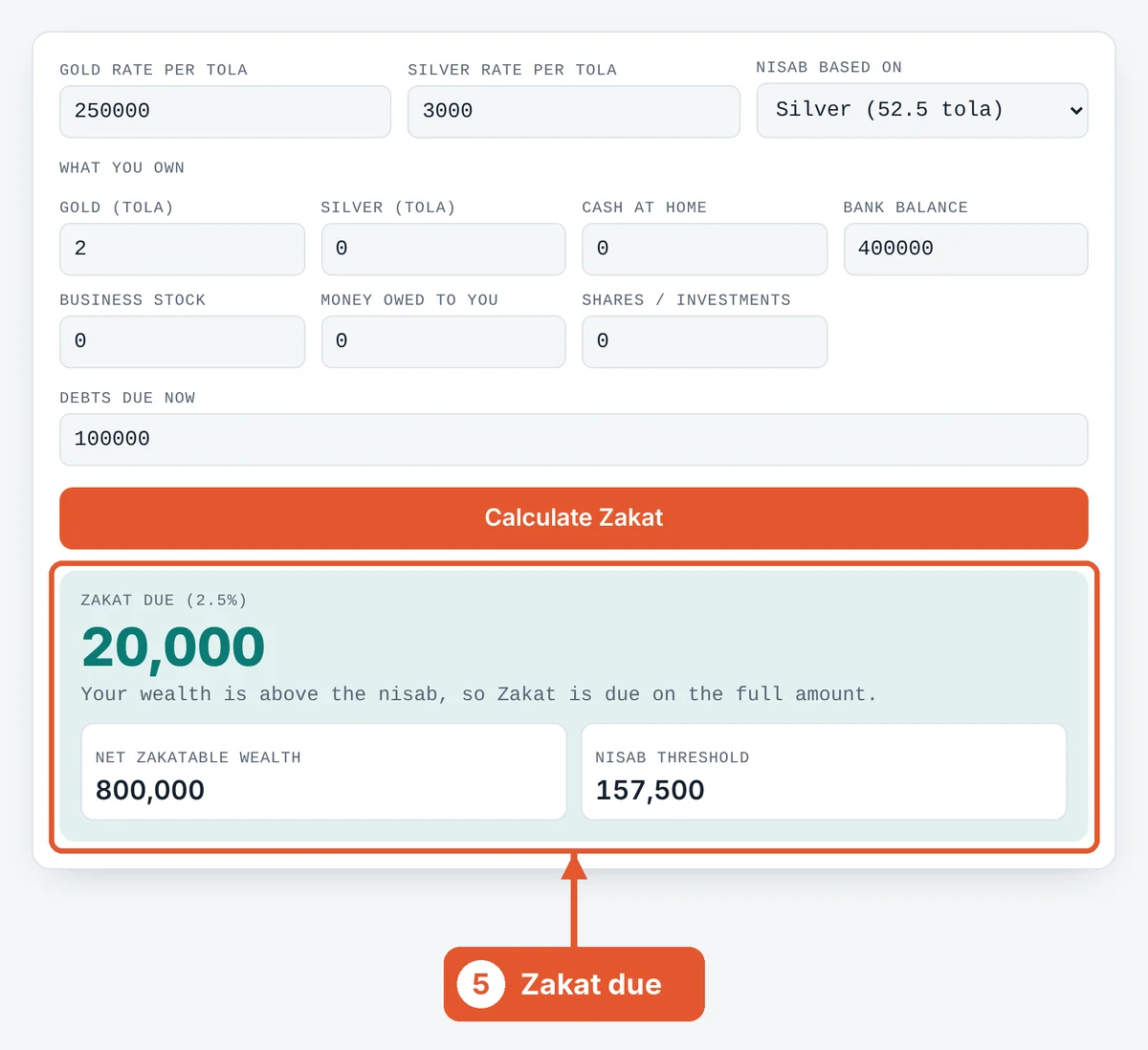
Say silver is 3,000 per tola. The nisab is 52.5 × 3,000 = 157,500. You have 400,000 in the bank, 2 tola of gold at 250,000 per tola (500,000) and a debt of 100,000 due this month.
800,000 ≥ 157,500, so Zakat is due
Zakat = 800,000 × 2.5% = 20,000
How to use the Zakat Calculator
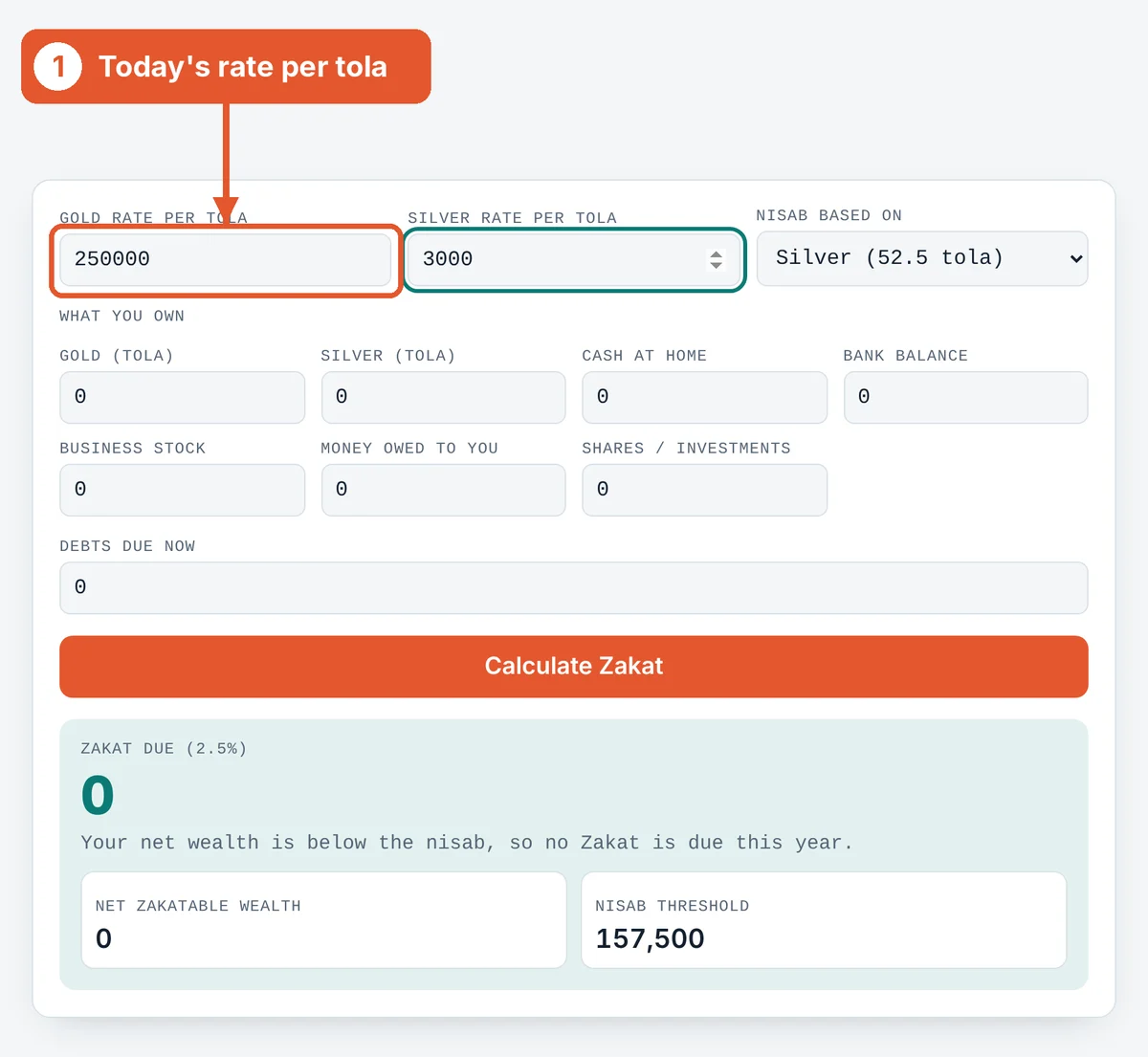
Enter today's metal rates
Type the current gold and silver rate per tola from your local market or jeweller. The silver rate is needed for the silver nisab.
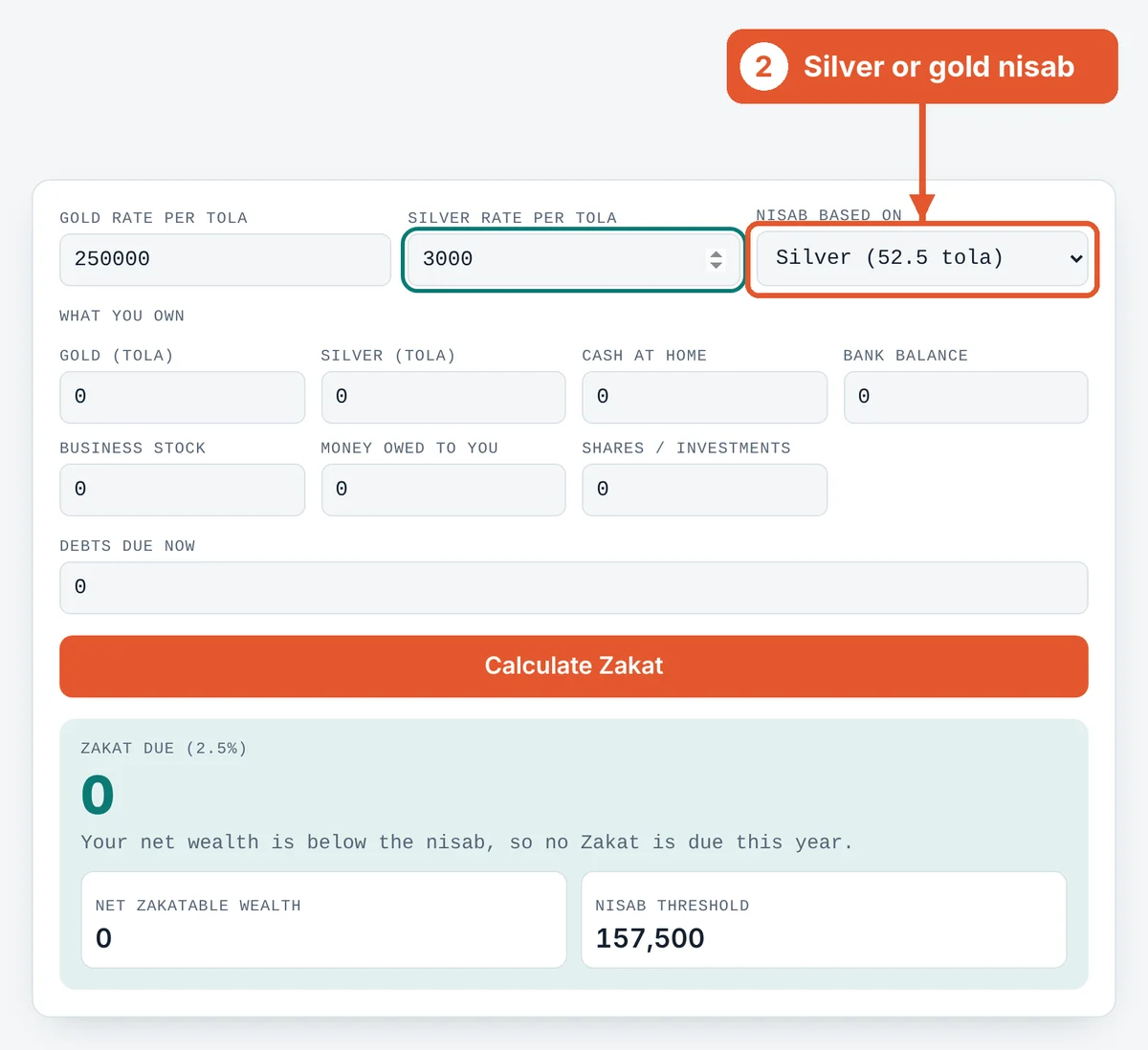
Choose the nisab basis
Silver is selected by default. Switch to gold if your scholar advises it.
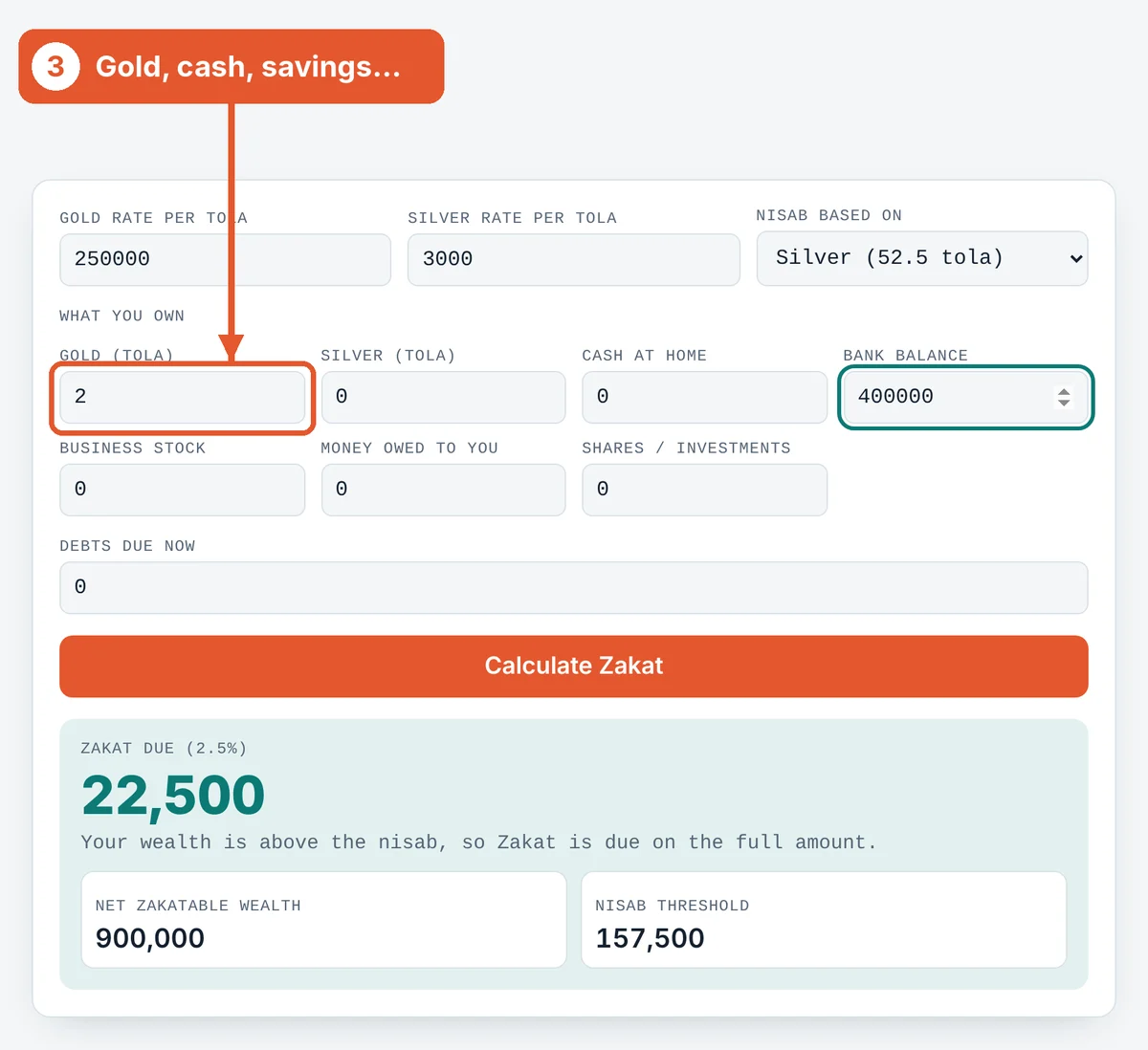
Add what you own
Fill in only the boxes that apply to you and leave the rest at zero.
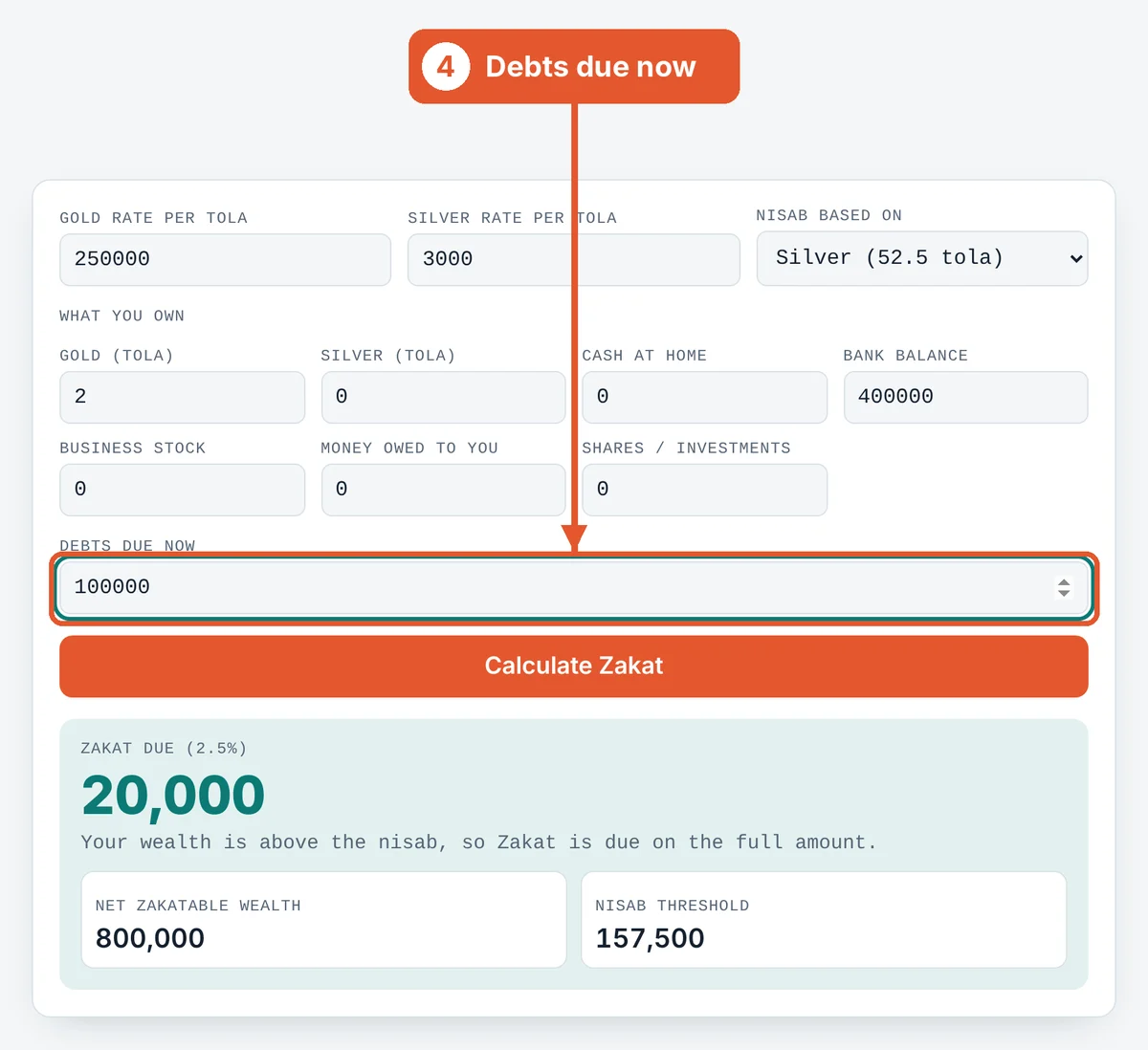
Subtract your debts
Enter debts you have to pay now, such as this month’s loan instalment or an unpaid bill. Long-term loans are treated differently by different scholars, so include only what is due.
See your Zakat
The Zakat due appears in large text, with your net wealth and the nisab beneath it.
What counts and what doesn’t
Counted: cash at home and in the bank, gold and silver (including jewelry, according to most Hanafi scholars), goods bought for resale, money you expect to get back, and shares or funds held as investments.
Not counted: the house you live in, your car, household furniture, clothes, and tools you use for work.
Different schools of thought have different views on some items, such as jewelry that is worn regularly. This calculator gives you the arithmetic. For a ruling on your own situation, please consult a qualified scholar.
Frequently asked questions
What is the Zakat percentage?
Zakat is 2.5% of your net zakatable wealth, which is one-fortieth.
Is Zakat due on gold jewelry?
In the Hanafi school, followed by most people in Pakistan and India, Zakat is due on gold and silver jewelry. Other schools exempt jewelry that is worn regularly. Follow the view of your own scholar.
Which nisab should I use, gold or silver?
Many scholars recommend the silver nisab when your wealth is in cash or a mix of assets, because it is lower and benefits more people. If you own only gold, the gold nisab is often applied.
Do I pay Zakat on my house?
No. The home you live in, your car and personal belongings are not zakatable. Property bought to sell is counted as business stock.
When should Zakat be paid?
Zakat is due once your wealth has stayed at or above the nisab for one full Hijri year. Many people choose a fixed date, often in Ramadan, to calculate it each year.
Can I use this calculator in any currency?
Yes. Enter every amount in the same currency, including the gold and silver rates, and the result will be in that currency.
Sources and further reading
Related tools
Last reviewed: October 2026